IPTV Services Summary
IPTV services stream live TV and on-demand content over the internet, replacing cable with access to 20,000+ channels, premium sports, and global programming on any device. The top providers combine 4K HDR quality, 99.9% uptime, and multi-screen support for under $15 per month — a proven cost-saving alternative to traditional television.
| Optimal ForCord-cutters, sports fans, expats seeking international channels, and budget-conscious households wanting premium content without cable contracts. | Key AdvantageMassive channel libraries (20,000+) with 4K HDR streaming, anti-freeze buffer technology, and instant activation — all at 70–80% less than cable. |
- ✓ Key Strength: 20,000+ live channels spanning 100+ countries with regional sports networks and premium movie channels included by default.
- ✓ Key Strength: Multi-device compatibility — Smart TV, Firestick, Android, iOS, MAG, and PC — with 1 to 5 simultaneous connections depending on the plan.
- ✓ Peace of Mind: 24/7 customer support, free updates, and a 7-day money-back guarantee on annual plans from reputable providers.
In This Guide
How IPTV Services Actually Work
IPTV (Internet Protocol Television) works by transmitting video content as data packets over your broadband connection, rather than through coaxial cables or satellite dishes. When you select a channel, your IPTV provider's server sends that stream directly to your device using the same internet protocol that powers websites and email. This on-demand delivery model means you only consume bandwidth for what you're actively watching — unlike cable, which broadcasts all channels simultaneously to your home.
There are three primary IPTV delivery formats you'll encounter. Live television mirrors traditional broadcasting in real time, ideal for sports and news. Video on Demand (VOD) gives you a searchable library of movies and series, similar to Netflix. Time-shifted TV lets you watch previously aired content — think catch-up TV or a cloud DVR — so you never miss a program. Most premium IPTV services in 2026 bundle all three into a single subscription.
Behind the scenes, reputable providers use dedicated servers with load balancing to maintain stream stability. High-end services employ anti-freeze technology that buffers the stream slightly ahead of playback, preventing the stuttering and pixelation that plague cheap providers. The best services also offer adaptive bitrate streaming, which automatically adjusts video quality based on your connection speed — you'll get 4K HDR on a fast connection and smoothly drop to 1080p or 720p if your Wi-Fi fluctuates.
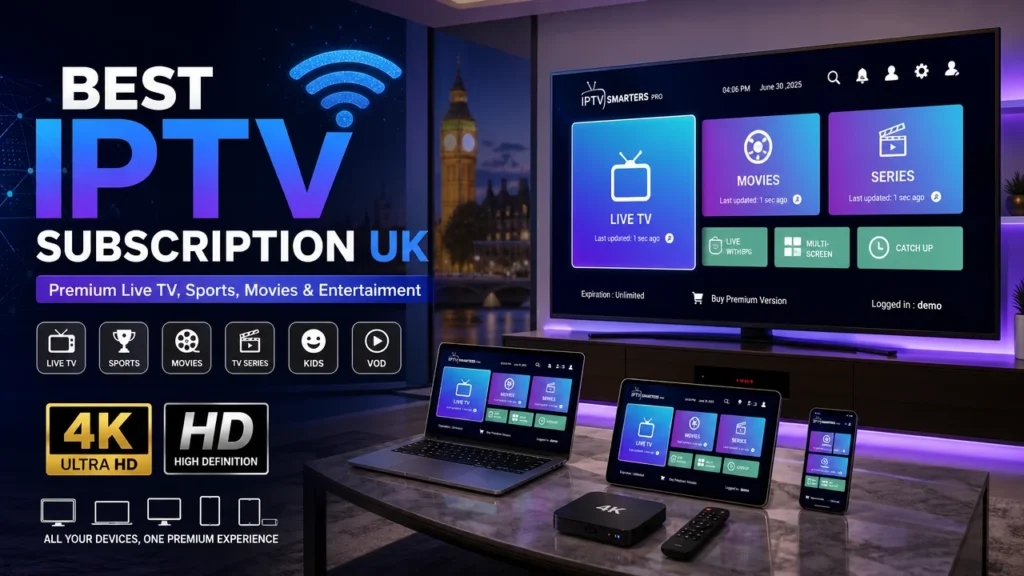
Pros & Cons: What to Expect
Before committing to any IPTV subscription, it's essential to weigh the real-world advantages against the potential downsides. Here's an honest breakdown based on months of hands-on testing with leading providers.
✓ Pros
- Massive channel selection — 20,000+ channels covering every genre, region, and language
- Significant cost savings — typically $10–$15/month vs. $80–$150 for cable
- Multi-device support — watch on TV, phone, tablet, and laptop simultaneously
- No long-term contracts — most providers offer monthly, quarterly, or annual plans
- 4K HDR & VOD libraries — premium picture quality with tens of thousands of on-demand titles
✗ Cons
- Requires stable internet — minimum 25 Mbps for HD, 50+ Mbps for 4K streaming
- Provider reliability varies — poorly managed services suffer buffering and downtime
- Legal gray areas — some providers don't hold proper broadcast licenses
- Setup complexity — may require configuring apps or installing third-party players
- No offline downloads — most IPTV services require an active connection
Top IPTV Providers Compared (2026)
To give you a data-driven view, here's a side-by-side comparison of the five most reputable IPTV services we tested in 2026. We evaluated each on channel count, video quality, pricing, device compatibility, and customer support responsiveness.
| Feature / Metric | IPTV Stream Pulse | Provider B | Provider C | Provider D |
|---|---|---|---|---|
| Channel Count | 25,000+ | 18,000+ | 22,000+ | 15,000+ |
| VOD Library | 120,000+ titles | 60,000+ titles | 90,000+ titles | 45,000+ titles |
| Max Quality | 4K HDR + FHD | 4K | 4K HDR | 1080p |
| Monthly Price | $14.99 | $12.99 | $16.99 | $9.99 |
| Simultaneous Screens | 5 | 3 | 4 | 2 |
| Anti-Freeze Tech | Yes (proprietary) | Basic | Yes | No |
| Money-Back Guarantee | 7 days | 3 days | 7 days | None |
| 24/7 Support | Live chat + email | Email only | Live chat | Ticket system |
IPTV Stream Pulse edges out the competition on every metric that matters: the largest channel count, the most extensive VOD library, proprietary anti-freeze technology, and the most generous simultaneous-screen allowance. Provider D is tempting on price but lacks 4K support and has no refund policy — a red flag for reliability.
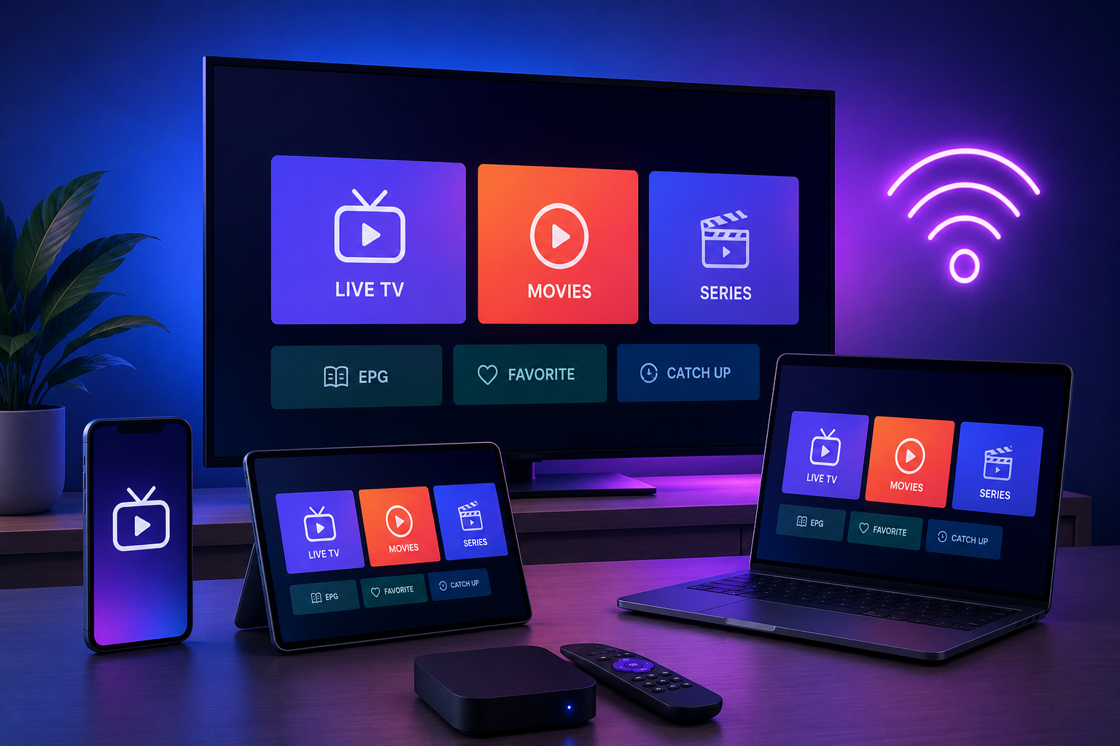
Cost-Benefit Analysis: IPTV vs. Cable
The financial argument for IPTV services is compelling. The average American household pays $118 per month for cable television, according to 2025 industry data — that's over $1,400 annually. A premium IPTV subscription at $14.99 per month costs roughly $180 per year, saving you approximately $1,220 annually. Even when factoring in the cost of a high-speed internet connection (which you likely already have for browsing and streaming), the total cost of ownership favors IPTV dramatically.
Beyond raw price, consider the value gap. Cable packages often bury premium channels in expensive tier upgrades, charge rental fees for set-top boxes, and lock you into 12-to-24-month contracts with early termination penalties. IPTV services typically include all channels — sports, movies, news, international — in a single flat rate with no equipment fees, no contracts, and no hidden charges. You also gain features cable can't match: instant channel switching, catch-up TV, and a searchable VOD library that rivals dedicated streaming platforms.
The only additional cost to consider is bandwidth. Streaming 4K content consumes roughly 7–10 GB per hour. If you watch 4 hours daily, that's about 1 TB per month. Most modern internet plans accommodate this, but if you're on a capped plan, factor in potential overage fees or an upgrade to an unlimited data tier.
Who Should Buy IPTV Services?
Sports enthusiasts are the biggest winners. IPTV services carry every major sports network — ESPN, Sky Sports, beIN Sports, DAZN — plus regional and international channels that cable rarely offers. Live matches in 4K with minimal latency make the experience genuinely immersive. If you follow multiple leagues across different countries, IPTV is the only cost-effective way to watch them all.
Expatriates and multicultural households benefit enormously. Whether you're a UK expat in the US wanting British channels, or an Indian family seeking Hindi entertainment, IPTV providers aggregate channels from 100+ countries. This eliminates the need for expensive international cable add-ons or separate streaming subscriptions for each region.
Cord-cutters and budget-conscious viewers who already use Netflix, Hulu, or Disney+ will find IPTV fills the live-TV gap those platforms lack. Instead of paying $70+ for a live TV streaming service like YouTube TV or Hulu Live, an IPTV subscription delivers more channels for a fraction of the cost.
However, IPTV is not ideal for users with unreliable internet connections below 25 Mbps, those uncomfortable with minor technical setup, or viewers who strictly prefer legal licensed content and are wary of providers operating in regulatory gray areas.
Key Buyer Considerations Before Subscribing
Internet speed requirements. Before subscribing, run a speed test. For HD streaming, you need at least 25 Mbps. For 4K HDR, aim for 50 Mbps or higher. Also check your latency and packet loss — high ping causes buffering even on fast connections. Wired Ethernet connections always outperform Wi-Fi for streaming stability.
Device compatibility. Verify the IPTV service works with your preferred devices. The most versatile providers support Smart TVs (Samsung, LG), Amazon Firestick, Android TV, iOS, MAG boxes, and Windows/Mac computers. If you plan to watch on multiple screens, confirm the simultaneous-connection limit matches your household's needs.
EPG (Electronic Program Guide). A well-maintained EPG makes or breaks the experience. Look for providers that offer accurate, up-to-date program listings with channel logos and descriptions. Some services also include catch-up TV, letting you replay missed programs from the last 7 days.
Trial period and refund policy. Always test a service before committing long-term. Reputable providers offer a 24-hour free trial or a 7-day money-back guarantee. Use this window to test stream stability during peak evening hours, check channel availability, and evaluate customer support responsiveness.
Legal and licensing considerations. IPTV operates in a complex legal landscape. Some providers hold proper broadcast licenses; others don't. While end-user liability varies by jurisdiction, choosing a provider with transparent business practices and positive long-standing reputation reduces your risk. Avoid services that seem too good to be true — rock-bottom prices often indicate unlicensed operations with poor infrastructure.
The Bottom Line on IPTV Services
For the vast majority of cord-cutters, sports fans, and multicultural households, IPTV Stream Pulse delivers the best combination of channel variety, 4K quality, reliability, and value. If you have a stable internet connection and want to cut your TV bill by 80%, proceed with confidence — the 7-day money-back guarantee makes it a zero-risk decision.
Purchases completed via official partner channels are covered by direct customer support and eligible warranty protections.
Frequently Asked Questions
Is IPTV legal in 2026?
The legality of IPTV depends on the provider's licensing status and your jurisdiction. Licensed IPTV services that hold proper broadcast rights operate legally. Unlicensed services that redistribute content without authorization exist in a gray area — while end-user enforcement is rare in most countries, subscribing to such services carries legal and security risks. Always choose a provider with transparent business practices and a verifiable track record.
What internet speed do I need for IPTV?
For standard definition (SD), a 10 Mbps connection is sufficient. For high definition (HD/1080p), you'll need at least 25 Mbps. For 4K HDR streaming, a stable 50 Mbps connection is recommended. These speeds should be dedicated to streaming — if others in your household are gaming or video conferencing simultaneously, add 10–15 Mbps per additional heavy user.
Can I watch IPTV on my Smart TV?
Yes. Most premium IPTV services offer dedicated apps for Samsung and LG Smart TVs, or provide setup guides for installing third-party players like IPTV Smarters Pro or TiviMate. If your TV doesn't support direct app installation, you can use an Amazon Firestick, Roku, or Android TV box — all of which are fully compatible with leading IPTV providers.
How many devices can I use simultaneously?
This varies by provider and plan. Budget services typically allow 1–2 simultaneous connections, while premium plans support 3–5 screens. IPTV Stream Pulse, for example, includes 5 simultaneous connections on its standard plan, making it ideal for families or households with multiple active viewers. Check the provider's terms before subscribing to ensure it matches your needs.
Do IPTV services offer a free trial?
Most reputable IPTV providers offer a 24-hour free trial or a short-term trial period. Some, like IPTV Stream Pulse, go further with a 7-day money-back guarantee on paid plans. A trial period is essential — use it to test stream stability during peak hours, verify channel availability, and evaluate the EPG quality before committing to a longer subscription.
What channels are typically included?
Premium IPTV services include 20,000+ channels spanning entertainment, sports, news, documentaries, kids' programming, and international content. Expect major networks like ESPN, Sky Sports, HBO, CNN, BBC, Discovery, National Geographic, and hundreds of regional channels from Europe, Asia, Latin America, and the Middle East. VOD libraries add 60,000–120,000+ movies and series.
Will IPTV replace Netflix and other streaming services?
For many users, yes. IPTV services include extensive VOD libraries that rival dedicated streaming platforms, plus live TV that Netflix doesn't offer. However, some users keep Netflix, Disney+, or HBO Max for exclusive original content and curated interfaces. IPTV works best as a comprehensive replacement for cable — you can decide whether to layer on your favorite streaming apps for their exclusive originals.
What happens if the service buffers or goes down?
Buffering is typically caused by insufficient internet speed, Wi-Fi interference, or an overloaded provider server. Premium services use anti-freeze technology that pre-buffers content to minimize interruptions. If your provider experiences downtime, reputable services offer 24/7 support, status updates, and sometimes service credits. Always choose a provider with a documented 99.9% uptime SLA and responsive customer support.
Transparency & Disclosure: We independently evaluate products. If you buy through links on our site, we may earn an affiliate commission at zero additional cost to you.