By Chris M. · Updated 2026-08-16 · 14 min read
The gap between “IPTV sounds great” and “IPTV works great” is wider than most buyers expect. A service that looks convincing on a landing page can collapse into buffering, dead channels, and unresponsive support within the first week. This guide gives you a practical checklist so you can evaluate IPTV services before spending a single dollar.
You’ll find no flashy marketing claims here. The focus is on what genuinely matters when you pay for live TV, sports, movies, and international channels over the internet. Whether you need the best IPTV services for sports, a reliable package for the whole household, or a provider that covers local channels properly, the criteria below apply to every situation.
The dashboard shown above is typical of a properly organized service: color-coded categories, a usable favorites list, and a search bar that finds channels instantly. If a provider’s interface looks chaotic on day one, expect their documentation and support to be equally thin.
Why Many People Regret Their IPTV Choice
Most regret stories follow the same pattern. A buyer picks a provider exclusively on price, skips the trial, pays for a full year upfront, and then discovers that prime-time sports matches freeze every few minutes. By the time they ask for a refund, the reseller has stopped replying.
Another common trap is buying a plan advertised as having 20,000 channels. That number sounds impressive, but a large portion is usually duplicates, low-bitrate foreign feeds, or channels that go offline for weeks. What you want is not a high channel count; it’s a stable and well-maintained playlist.
There is also the reseller problem. A large share of IPTV providers operate as resellers who rent server access from a bigger platform. If the upstream server changes or vanishes, the reseller may have no ability to fix anything. You are then left with a dead subscription and no explanation.
The result of all this is a year-long contract with a broken service and zero recourse. That outcome is avoidable if you check a few structural signals before you commit.
The Criteria That Should Drive Your Decision
Not all IPTV services are equal, but the factors that separate the reliable ones from the disposable ones are consistent. Use these as your evaluation framework.
Server reliability and uptime. Ask the provider directly about their server infrastructure. A serious operation usually has redundant servers in multiple locations. If the only answer you get is “it’s fast, trust me,” treat that as a red flag.
Buffering on live sports. Live sports is the most demanding use case for any IPTV service. You need high frame rate, low latency, and enough bitrate to keep the picture crisp during fast action. Always test this during an actual live event rather than a replay.
Electronic Program Guide (EPG) quality. Some services offer a full EPG for the first few days, and then it disappears. A reliable provider maintains an updated guide across all major channels, including local ones, for the duration of your subscription.
Device compatibility. Confirm that the service has a dedicated app for your TV, Android box, Fire Stick, iOS device, or whatever you plan to use. Generic M3U playlists can be loaded into a third-party player, but a native app usually means better support and simpler setup.
Connection policy. How many simultaneous connections does the plan include? A couple of IPTV services with no buffering issues, a family plan that supports two or three screens, and a clear policy on reconnecting after a device reset are all worth paying for.
After-sales support. Can you reach the provider via Telegram, WhatsApp, email, or a support portal? Do they answer within a few hours? Test this during the trial period, not after you pay. A question like “my channel list is empty, how do I refresh it?” tells you a lot about their competence.
✓ Benefits & Pros
Flexible pricing tiers compared to traditional cable or satellite
Watch on smart TV, phone, tablet, laptop, or set-top box
Sports packages that local cable rarely includes in base plans
Access to international channels from nearly any country
No hardware installation or long-term contracts required
✗ Limitations & Cons
Quality varies dramatically from one provider to another
Resellers can disappear overnight without notice
Legal status depends on the content licensing of each provider
Requires stable internet with enough bandwidth for HD and 4K
Standard troubleshooting documentation is often missing
RECOMMENDED RESOURCE
iptv services
Compare premium line configurations and promotional limits before you settle on a seller.
Check Out iptv services Deals →What You Need to Know About the Current IPTV Market
The IPTV market in 2026 is fragmented. It ranges from large, long-running platforms with stable infrastructure to week-old reseller stores that copy a website template and sell access to someone else’s server. The challenge is that both often look similar from the outside.
Pricing, for example, is not a reliable quality signal. Some excellent services charge around $10–$15 per month, while terrible ones charge $25 and disappear. At the same time, a $3 monthly plan can occasionally work well for a few months, which keeps the cycle of cheap buying alive.
Sports remains the biggest driver of IPTV purchases. Fans are looking for the best IPTV services for sports because traditional cable packages rarely include the leagues and channels they want. International channels are the second biggest draw, especially for immigrant communities that want live TV from their home country. In both cases, the deciding factor is not the channel list, but the quality of the streams and the reliability of the servers during peak event times.
Where to buy IPTV services also matters. Many buyers start with Telegram groups, Reddit threads, or recommendations from friends. That’s fine, but it increases the chance of running into a reseller with no direct relationship to the infrastructure. Legitimate providers usually have a proper website, a public trial, and a way to contact them outside of a messaging app.
Finally, you should know that the regulatory environment is still uneven. In some countries, IPTV services that rebroadcast licensed content without authorization are legally problematic. The provider bears most of the risk, but you should understand the situation in your region so that you make an informed choice.
Questions to Ask Before You Buy
- Can I test the service for 24 or 48 hours? A provider that refuses a trial is either unsure of their product or aiming at a quick cash grab. Always test during a live sports event if possible.
- How many devices can I connect simultaneously? If you plan to share the account across a living room TV and two mobile phones, the answer must be clearly stated. No vague wording.
- What is your refund policy? Some services offer refunds within 7 days. Others pretend the question doesn’t exist. Get the policy in writing before paying.
- Do you provide a dedicated app, or do I need a third-party player? Services that only give you an M3U playlist and send you off are not necessarily bad, but they require more technical work from you.
- Are local channels for my specific city or region included? “Local channels” can mean anything from national broadcasters to actual neighborhood news channels. Confirm the exact list.
- What is your connection or installation guide? A detailed guide tells you the provider cares about setup experience. A one-line PDF full of typos is a bad sign.
- Do you have a backup server? When the main server goes down, a good provider switches to a backup within minutes. Ask how often that happens and whether you will be told about it.
Warning Signs to Spot in IPTV Services
The quickest way to avoid a bad purchase is knowing what a bad provider looks like before you fall into their funnel.
No trial, no refund, no conversation. This is the most obvious warning sign. Legitimate operations want you to test because they know their service holds up. If the only option is paying for 12 months upfront, walk away.
Unrealistic channel counts. A plan saying “25,000 channels” is almost always inflating its numbers with dead links and duplicates. A quality provider would rather market 4,000 working channels and a full EPG than a fantasy number.
Zero social presence or track record. Search for the provider’s name in forums, Reddit, and Trustpilot. The absence of any third-party discussion is a concerning sign. The presence of dozens of identical positive comments posted on the same day is equally telling.
Vague payment terms. If the checkout page accepts only cryptocurrency and offers no invoice or receipt, you lose all ability to dispute a charge. While many legitimate IPTV providers accept crypto, they also offer credit card or PayPal options.
Repeated server names. When two different storefronts mention the same server or reseller ID, you are likely dealing with a middleman. That is fine if the upstream service is good, but you have no direct relationship with the infrastructure owner and support will be limited.
Comparison Table: Available IPTV Service Categories
The table below summarizes the main types of services you will encounter when comparing IPTV service plans. Use it as a framework to narrow down your search.
If you’re ready to skip the trial-and-error phase and compare tested plans side by side, start here.
Explore iptv services Plans →Recommendation by Budget and Needs
Budget buyers and first-time users. If you want to test the waters without a big commitment, look for a monthly plan from a mid-range provider. Paying $10–$12 for one month is the smartest way to evaluate a service. Skip the and yearly discount until you are confident the provider is stable.
Families with multiple devices. Affordable IPTV services for families exist, but you need to check the connection policy carefully. A plan that allows three simultaneous streams for around $15 per month is worth far more than a $5 plan that limits you to one screen. Your household will also benefit from a service with good EPG coverage and local channels, since different members will watch different content.
Sports enthusiasts. The best IPTV services for sports are the ones that offer low-latency streams and dedicated sports sections. You want a provider that lists the channels you care about early in the trial, responds quickly during a match, and offers a backup server for big events. Do not buy a sports-heavy plan without watching one full live game with your own eyes.
International viewers. IPTV services for international channels vary widely in how they organize content by country and language. Test the countries you actually care about during the trial and check whether subtitles or multi-language audio are available. Some services are strong in Arabic or South Asian content but weak in European or African programming, so personal needs still matter.
How to Maximize Your IPTV Investment
Once you have chosen a provider, a few smart habits will get you far more value from the service.
- Set up the service on your primary device first. Install the app, load your playlist, and verify that the EPG populates correctly before adding other devices. This makes troubleshooting easier if something breaks later.
- Use a wired connection for your main TV. Ethernet beats Wi-Fi when it comes to steady bandwidth, especially for 4K or sports streams. If you must use Wi-Fi, place the router close and avoid other heavy downloads during viewing.
- Connect a VPN if needed. Some internet service providers throttle IPTV traffic during peak hours. A VPN can help you avoid artificial slowdowns and adds a layer of privacy when using the service.
- Keep a backup player installed. If the provider’s app fails, you can load the same M3U playlist into a player like TiviMate or IBO Player. This often solves codec and playback issues quickly.
- Refresh your playlist periodically. Channel lists change as providers add and remove streams. Most apps have a refresh or update option. Doing this every few weeks keeps your list accurate.
- Contact support during the trial period. Use the trial to test not just the streams, but also the support team. Send one technical question and time how long it takes to get a useful answer.
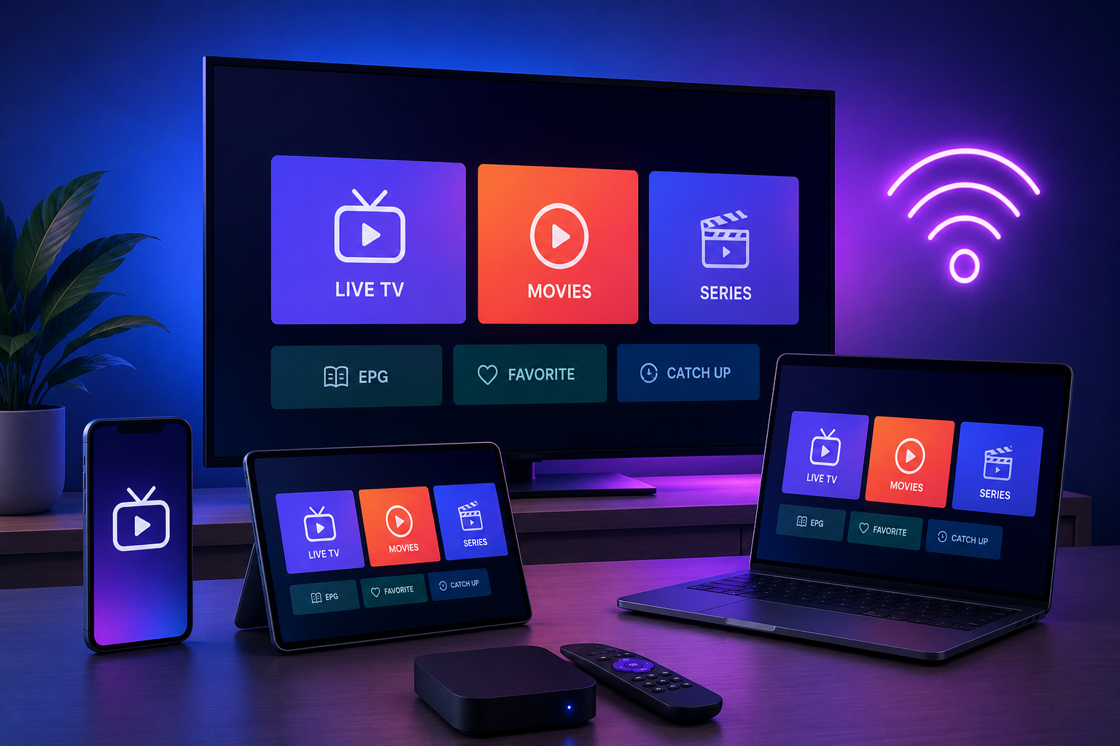
The interface shown above is what you should expect from a mature provider: tidy sections, easy search, and minimal dead space. If your trial period feels cluttered or confusing, that’s a clue that the provider is not investing in the customer experience.
The most important habit is to pay monthly at the beginning. The slight saving from paying yearly is not worth the risk of losing your entire investment in the first month. Once you have used the service for three or four months without major issues, then you can decide if the annual plan makes sense.
Finally, keep a note of your login details, playlist URLs, and payment receipts in a safe place. Losing access to your account and being unable to recover it because you lack the original details is a frustrating and common problem that is entirely avoidable.
Choosing the right IPTV service comes down to doing a few hours of preparation rather than weeks of regret. Start with a trial, test live sports and local channels, verify support speed, and only then commit to a longer billing cycle.
Featured Streaming Selection:
See iptv services Pricing →Affiliate Disclosure: Clicking this secure link verified by our network supports our team through standard partnership terms at zero extra cost to your invoice.
Frequently Asked Questions
This article contains affiliate links. Our editorial analysis remains independent.