By Analyst Team · Updated 2026-08-08 · 12 min read
An IPTV box can change how you watch television, but it is one of the most misunderstood streaming devices. People confuse it with a Fire TV Stick, a satellite receiver, or a magic tool that provides every channel for free. This complete guide explains exactly what an IPTV box is, how it works, how to set one up, and how to avoid the common pitfalls. In the main setup image below, you can see the simple physical idea: a small box sits between your internet connection and your TV, turning an internet stream into a live channel guide on the big screen.
Short on time?
The fastest route to a working sports setup is an IPTV box plus a verified no-contract IPTV plan. Continue reading to compare your options before buying.
What Exactly Is an IPTV Box?
An IPTV box is a small streaming receiver that connects to your television through HDMI and plays live TV channels over the internet using an IPTV subscription. IPTV stands for Internet Protocol Television. Instead of receiving a broadcast signal through an antenna, satellite dish, or cable line, the box receives IP-based video from a service provider. That one change makes a big difference: your channel line-up is no longer limited by geography or cable infrastructure.
Most devices sold as IPTV boxes are Android-based. They run Android TV or a custom Android interface, so you can install streaming apps like TiviMate, IPTV Smarters Pro, Kodi, and even mainstream services such as Netflix and YouTube. Dedicated MAG and Enigma2 boxes are the other option; they use built-in portal software and are often preferred by people who want a simpler, more traditional remote control experience.
Related terms you will see
When you start researching IPTV boxes, you will run into a handful of technical terms. They are not as complicated as they look.
- M3U playlist: a URL or file that contains the list of channel streams your IPTV service uses.
- Xtream Codes: a portal login format where you enter a server URL, username, and password in your IPTV player.
- EPG: the electronic programme guide that shows what is currently airing and what is scheduled next.
- VOD: video on demand, meaning the film and series library inside your IPTV subscription.
- Provider or reseller: the company or individual you buy the IPTV subscription from.
How an IPTV Box Works (Step-by-Step Setup)
The moment you press play on a live channel, the IPTV box sends a request to the service provider’s server. The server responds with small data packets containing the video stream. The box then decodes those packets and displays the picture on your television. In most cases, the video is delivered using formats like HLS or MPEG-TS, and the EPG updates automatically so you can see what is on each channel.
For the actual setup, the process is usually the same regardless of which box you buy:
- Connect the IPTV box to your TV using an HDMI cable.
- Plug the power adapter into the box and connect it to the internet through Wi-Fi or Ethernet.
- Open the IPTV player app on an Android box, or the built-in portal on a MAG box.
- Enter your subscription details: normally a portal URL, username, and password, or an M3U link.
- Wait for the channel list and EPG to load, then select a channel to start watching.
- Optional: install a VPN app before opening your IPTV player if your internet provider throttles streaming traffic.
A typical first setup takes between 5 and 15 minutes. The hardest part is usually choosing a reliable service. If you are not sure where to start, the no-contract option referenced in this guide at buyiptv3.com removes most of the guesswork because it includes clear credentials and a support team.
LIMITED TIME AVAILABILITY
Unlock Full IPTV Box Access
Secure special promotional rates instantly before the window closes. Lock in your pricing model today before plans return to standard regional metrics. The mock-up below shows what a premium channel line-up looks like after login.
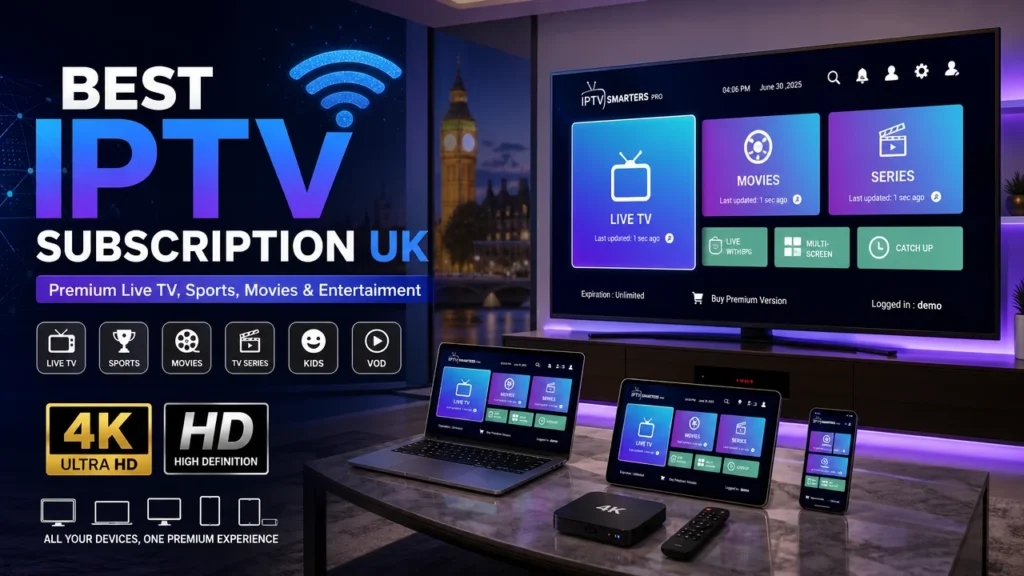
The image below shows how one IPTV box setup can feed multiple televisions in the same household. Unlock complete high-definition information and priority access packs from the verified provider.
Claim This Special Offer for IPTV Box →Concrete Benefits of Using an IPTV Box
Why do people replace traditional TV with an IPTV box? The reasons are usually practical rather than technical. Here are the benefits that come up most often in real user reviews:
- No cable contract: IPTV box subscriptions can be sold month to month, so you are not locked into a 12-month or 24-month contract.
- More international sports: Many services include live sports channels from multiple countries, which is useful for football leagues, boxing, cricket, and motorsport.
- Flexible apps: Android-based boxes let you switch between IPTV players, Kodi, YouTube, and mainstream streaming apps without changing device.
- Multi-screen potential: With the right subscription, one IPTV box plan can be used on several devices in the same house.
- Great value compared with cable: A decent box costs less than one month of traditional cable television, and no-contract plans keep the monthly cost predictable.
Honest Limitations and Risks
IPTV boxes are not magic. They depend on a stable internet connection, and your experience will only be as good as your broadband connection and your provider’s servers. If you expect perfection, you may be disappointed.
- Legal grey area: Some IPTV resellers operate outside official distribution agreements. Use a verified service and understand the rules in your country.
- Buffering at peak times: Popular live events can strain servers, causing stutters or lower quality. A wired connection and a VPN often help.
- ISP throttling: Some internet providers identify IPTV traffic and slow it down. A VPN hides the type of traffic, but adds a small amount of overhead.
- Support can disappear: Cheap hardware from unknown brands rarely receives Android or firmware updates after launch.
- Requires broadband speed: For live HD sports, you need at least 25 Mbps. For 4K streams, 50 Mbps or more is safer.
IPTV Box Pros and Cons
What users like
- Much lower long-term cost than cable TV
- Access to global sports and cultural channels
- No contract required with most sellers
- Works with existing Wi-Fi or Ethernet
- Easy to install extra streaming apps
What to watch out for
- Quality depends heavily on the provider
- Some providers disappear without warning
- Legal uncertainty around unlicensed streams
- Setup can feel technical for beginners
- Not all boxes support the latest 4K codecs
IPTV Box vs Fire TV Stick vs Smart TV vs Cable
If you are comparing an IPTV box vs Firestick, the main difference is hardware and flexibility. A Fire TV Stick is an excellent media dongle, but a dedicated IPTV box often has Ethernet, more RAM, and better cooling for live sports and 4K streams. The table below gives a quick overview.
| Option | Upfront cost | Monthly price | Best for |
|---|---|---|---|
| IPTV Box | $30–$100 | $10–$25 with no contract | Dedicated live sports, multi-room viewing, full channel guide |
| Fire TV Stick | $25–$60 | Same subscription, no hardware fee | Households already using Amazon and Android apps |
| Smart TV App | $0 if TV is modern | Same subscription, no extra cost | One TV and no extra box wanted |
| Traditional Cable | Possible installation fee | $60–$150 with contract | Viewers who prefer provider support and plug-and-play |
Who Should Buy an IPTV Box?
IPTV boxes are not for everyone, but they are ideal for several common household types. If you recognise yourself in one of these profiles, a no-contract IPTV box plan is worth trying.
- Cord cutters: people who have already cancelled cable and want a flexible replacement.
- Sports fans: if you follow overseas leagues, an IPTV box can deliver channels that are not available through local sports packages.
- Expat households: families who still want TV from their home country without installing a satellite dish.
- Multiple TV homes: families that want IPTV apps on several televisions using one subscription plan.
- Budget viewers: people who want a cheap IPTV box with Wi-Fi and are comfortable with basic tech troubleshooting.
How to Get Started With an IPTV Box in 8 Practical Steps
Here is the exact process we recommend when setting up an IPTV box for the first time:
- Check your internet speed. For HD live TV, you need at least 25 Mbps. For 4K, aim for 50 Mbps or more.
- Choose your hardware. An Android box with at least 2GB RAM is the minimum; 4GB is better if you watch a lot of 4K content.
- Choose a subscription. Look for a no-contract IPTV box plan with live sports, EPG, and responsive support.
- Connect the box to the TV using an HDMI cable, then connect the power adapter.
- Connect to the internet. Ethernet is always more stable than Wi-Fi, especially for 4K streams.
- Install an IPTV player. TiviMate and IPTV Smarters Pro are popular options on Android boxes.
- Enter your login details. Most services provide a portal URL, username, and password, or an M3U playlist link.
- Load the EPG and test channels. If you notice buffering, enable a VPN or move to a wired connection.
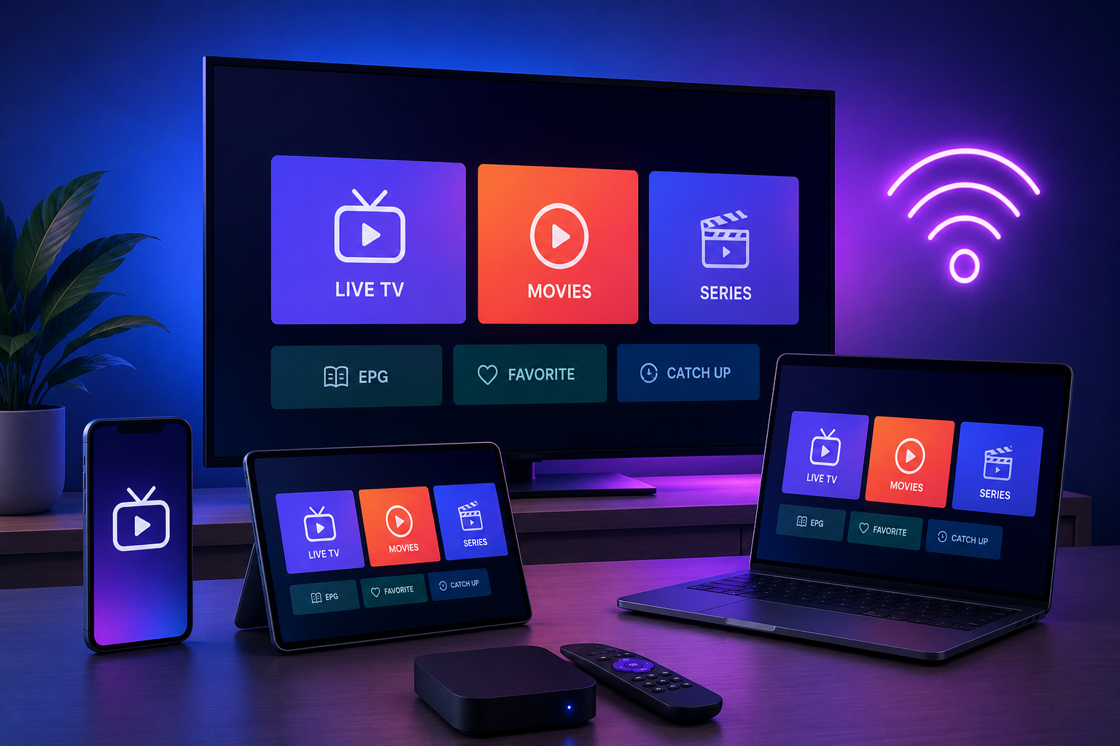
In the multi-screen setup above, one subscription can cover the whole household. Final subscription window:
Main Offer Today →Affiliate Disclosure: Clicking this secure link verified by our network supports our team through standard partnership terms at zero extra cost to your invoice.
Conclusion: Is an IPTV Box Worth It in 2026?
An IPTV box remains one of the most practical ways to cut the cord while keeping live sports, international news, and a full channel guide without a monthly cable contract. It is not risk-free: your results depend on internet speed and the reliability of the provider. But with careful selection, a cheap IPTV box with Wi-Fi can outperform traditional cable in both variety and price. The no-contract option tested for this guide is still available at buyiptv3.com, and it gives beginners a safe starting point.
Frequently Asked Questions
What is the best IPTV box for live sports?
There is no single best device because every household is different. Look for an Android-based 4K box with gigabit Ethernet or dual-band Wi-Fi, at least 2GB RAM, and Android 10 or newer. For live sports, a box that supports TiviMate or IPTV Smarters Pro is helpful because those apps include catch-up, EPG, and multi-view. Pair it with a no-contract provider that offers reliable sports channels from several countries.
How do I set up an IPTV box?
Connect the box to your TV through HDMI, plug in the power, and join your Wi-Fi network or Ethernet cable. Open the IPTV player app or built-in portal, enter the URL, username, and password from your IPTV provider, then load the channel list. Most current tutorials suggest the whole setup takes 5 to 15 minutes if your broadband is stable. After the channels load, you can add an EPG source to see what is airing at any given time.
What is the difference between IPTV box vs Firestick?
A Fire TV Stick is a media streaming dongle, not a dedicated IPTV box, although it can run IPTV apps. The IPTV box usually has more powerful hardware, wired networking, and extra USB ports for external storage and recording. Firesticks are smaller, cheaper, and better for mainstream apps. If your priority is live sports and multi-room streaming, a dedicated IPTV box is often more stable.
Where can I buy an IPTV box?
The safest places are Amazon, trusted electronics retailers, or the official page of the provider you plan to use. Avoid unknown marketplaces where hardware could arrive with pre-installed malware. If you want a subscription included, the offer referenced in this article bundles a verified no-contract IPTV plan with the hardware setup at buyiptv3.com. Always check whether the box ships from your own country to avoid voltage issues and slow delivery.
Can I get an IPTV box subscription with no contract?
Yes. Many IPTV providers sell monthly subscriptions with no commitment, and you can usually choose one month, three months, or a full year. A no-contract plan is useful when testing a service because it lets you cancel if channels buffer or support is weak. Keep in mind that no honest provider can guarantee every channel permanently, since unlicensed channels can disappear. Official and licensed IPTV services remain the safer long-term route.
Are 4K IPTV boxes any good?
A good 4K IPTV box is reliable, but the 4K label alone is not a guarantee. The box must combine a fast processor, at least 2GB RAM, HDR10 or Dolby Vision, and a strong internet connection. Without a 50 Mbps connection, 4K streams may buffer even on an expensive device. In real-world reviews, a capable 4K Android box paired with a low-cost IPTV subscription works well for mainstream use and sports channels that broadcast in Ultra HD.
Can I use an IPTV box for multiple TVs?
Yes, with the right setup. Most IPTV apps can be installed on more than one television, but the provider usually limits the number of simultaneous streams per subscription. If you want different channels on two TVs at the same time, choose a plan that supports multi-room connections. Alternatively, an HDMI splitter can send the same picture to several TVs, but every screen will show the same channel.
What is the cheapest IPTV box with Wi-Fi that still works well?
Budget Android boxes in the popular X96 or MXQ category can run IPTV apps, and dual-band Wi-Fi is enough for most HD streams. Expect less reliable hardware, slower Android updates, and weaker Wi-Fi antennas than premium devices. A sensible budget choice has at least 2GB RAM, Android 10 or newer, and a 5GHz Wi-Fi radio. Pair it with a good no-contract subscription rather than spending your whole budget on expensive hardware.