By Daniel R. · Updated 2026-08-16 · 12 min read
You settle into the couch. The match is about to kick off. The channel loads, the picture looks sharp for three seconds, then the wheel spins. It comes back. It dies again. The scene in the image above — a frozen frame, a spinner, and a person already reaching for their phone — is exactly the situation this guide removes. If you've found this article, you already know how specific that frustration is: the kind that makes you search "ip-tv provider not working" at midnight and scroll through twelve pages of copy-paste advice. The usual answers tell you to restart the router, clear the cache, and reinstall the app. They rarely fix anything because they rarely address the actual cause.
IPTV behaves like live television, but it is delivered like a website. A website can be slow because of your connection, because of the server, or because of the route between them. The same three bottlenecks apply to video streams. That is why one fix works for one person and fails for another — they are hitting different bottlenecks. This guide walks you through each layer and gives you a repeatable process to identify and fix the real problem.
Three Most Common Mistakes with ip-tv provider
Mistake 1: Choosing the cheapest subscription and skipping the research
The cheapest ip-tv subscription can look like an absolute win: every channel imaginable for less than the price of a burger. But ultra-low prices are only sustainable when the provider oversells its servers, which creates pronounced buffering during peak evening hours. The price tag alone is not the issue — plenty of affordable providers run clean infrastructure — but choosing on price without checking server transparency or taking a trial is a bet, not a decision.
Mistake 2: Testing the service at the wrong time of day
Every IPTV service looks flawless at 2 p.m. on a Tuesday. The real test is Saturday evening during a Champions League final or a prime UFC card, when every subscriber is pulling bandwidth from the same servers. If you only trial the service during work hours, you never see the conditions that matter. An ip-tv provider for sports should be judged during the exact moments you will need it most, not during an empty afternoon.
Mistake 3: Using the wrong app or the wrong stream protocol
Providers typically hand over several pieces of connection info: an M3U URL, Xtream Codes credentials, and sometimes a portal address. Your player may handle one of these methods significantly better than another. On top of that, many default smart TV apps are simply too weak — they struggle with H.265 codecs and cannot adjust to framerate changes, which creates the exact stutter and loading loops you are trying to escape.
Why the Usual Solutions Fail
"Restart your router" is the default answer everywhere, and it contains a tiny kernel of truth. Restarting can clear a broken DNS cache or renew your IP lease. But it does absolutely nothing when the problem sits on the provider's side. The reason these cookie-cutter fixes persist is simple: they occasionally work, and people repeat what worked once. If your provider's servers are congested, you can restart every device in the house and nothing changes.
The same is true for the ever-present "just use a VPN" advice. VPNs help when your ISP is throttling streaming traffic, and they are a great privacy layer. But they can also introduce a routing detour that increases jitter and makes streams worse. And when the provider is the weak link, a VPN is irrelevant. The only way to fix IPTV issues properly is to diagnose which third of the chain is failing: your local network, your app, or the provider's server.
What Experienced Users Do Differently
People who run IPTV without constant headaches are not lucky. They have a repeatable method. Here is what that method looks like:
- They install a dedicated player — TiviMate, IBO Player, or IPTV Smarters Pro — instead of a random app with a generic name and little else.
- They measure stability, not just speed. A 100 Mbps connection with 4 percent packet loss will buffer on a 5 Mbps stream, and most built-in speed tests hide that fact.
- They test the same playlist on more than one device before blaming the provider.
- They prioritize providers that publish uptime stats, run multiple servers, and offer trials that cover prime-time hours.
- They check independent conversations — like ip-tv provider reviews reddit threads — to see how complaints are handled, not just whether complaints exist.
These habits are easy to copy. They cost nothing, and they will save you hours of frustration.
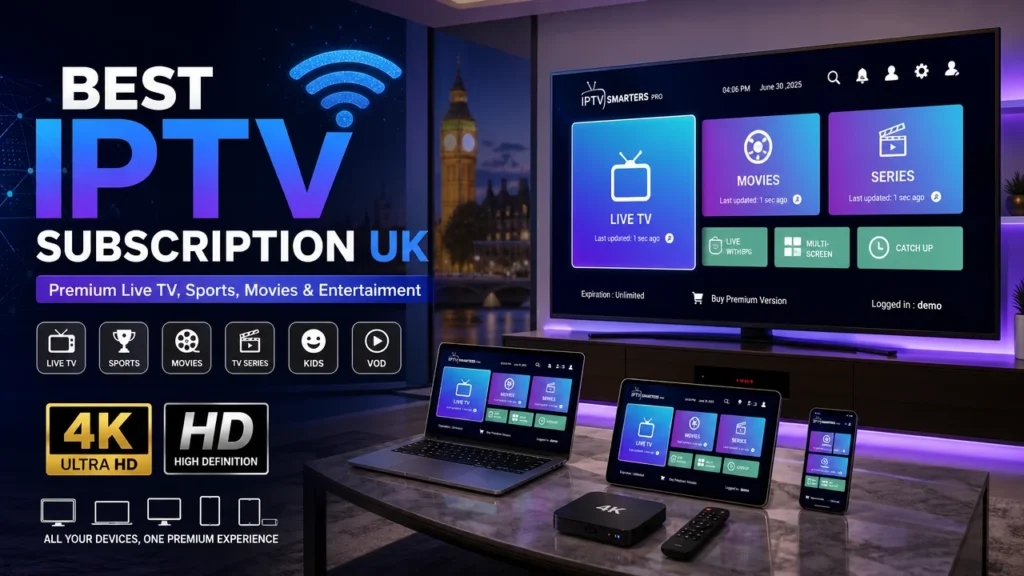
Take the broadcast above as an example. A stable 4K feed during live sports is the clearest signal that a service values its infrastructure. When you test a provider, the image on the screen tells you the truth faster than any marketing page.
The Step-by-Step Fix for Most ip-tv provider Problems
Step 1: Isolate the failing layer
Open the same playlist on your phone, your PC, and your TV. If the stream works on some devices and not others, the problem is local — the app, the device's network adapter, or the Wi-Fi band it connects to. If it fails everywhere at the same time, the problem is in the provider's infrastructure. This single test eliminates roughly two-thirds of all cases before you touch any settings.
Step 2: Check your network for packet loss, not just speed
Plug your streaming device directly into the router with an ethernet cable. If the issue disappears, Wi-Fi is the culprit. If it does not, run a continuous ping test for five minutes against a stable IP address and check for packet loss. Anything above 1 percent will cause buffering, even at high download speeds. Fix local interference, update router firmware, or stick with ethernet before touching any provider-related setting.
Step 3: Adjust the player's buffer and decoder settings
In your chosen player, increase the buffer size. TiviMate and similar apps offer options from Low to Very Large; "Large" is typically the sweet spot for live streams. Try switching between hardware and software decoding. Some TV boxes have poor hardware decoders that struggle with specific codecs. A change here resolves many freezes and audio/video desyncs without ever contacting support.
Step 4: Try alternative server URLs and stream protocols
If your provider gives you multiple URLs or ports, test every combination. Some players navigate M3U playlists better than Xtream Codes and vice versa. A secondary server port can also bypass a congested route on the network. Most users stop at the first piece of connection info they receive; experienced users view that list as a menu, not a mandate.
Step 5: Know when the provider is the problem — and switch
If you have done steps 1 through 4 and the service still dies at prime time, the provider is the bottleneck. No setting change on your side can fix an overloaded server. The final fix is choosing a better service. Learning how to choose an ip-tv provider — by testing trials at peak times, confirming server transparency, and reading independent reviews — is the skill that prevents you from revisiting this entire process six weeks from now.
Realistic Results After Applying These Fixes
With a healthy provider and a correctly configured player, this is what a normal evening looks like: zapping from channel to channel in one to three seconds, a stable 1080p picture on a 25–40 Mbps connection, smooth 4K on a wired 100 Mbps line, and maybe two or three short buffer events during a two-hour football match. That is the realistic standard behind a "reliable ip-tv provider no buffering" promise — the small print being "almost none" rather than "absolute zero".
What you should not expect is zero buffering during global pay-per-view events, instant channel changes on a crowded 2.4 GHz Wi-Fi network, or flawless playback in the middle of an ISP outage. Anyone guaranteeing otherwise is selling a fantasy.
Pitfalls to Avoid with Any ip-tv provider
- Never pay a full year upfront. Start monthly, even if the annual price is tempting. Providers degrade, disappear, or get blocked, and you want the option to walk away.
- Do not ignore EPG quality. Missing program data is usually a sign that the provider's technical side is unorganized.
- Do not sideload cracked apps. They save you nothing and can turn your device into a relay for someone else's traffic.
- Do consider legality. If you want to know where to buy ip-tv legally, look for providers that hold or disclose distribution rights for the content they carry. The safest choice is always a company with transparent terms of service.
- Do not trust countdown timers or fake review pages on the provider's own website. Independent sources are slower but far more honest.
What Works vs. What Does Not: A Practical Table
If you are weighing an iptv service vs cable tv for your household, the table above is a useful lens: IPTV wins on price, device flexibility, and channel count, while cable wins on stability, legal clarity, and support. The gap closes significantly when you choose the provider with care.
Pros and Cons: What You Gain and What You Still Have to Manage
✓ Benefits & Pros
Lower monthly cost than cable, with hundreds of international channels.
Works across phone, TV, and tablet with one subscription.
No long-term contracts; most services are month-to-month.
Catch-up TV, EPG, and VOD content in the same app.
✗ Limitations & Cons
Setup requires technical care and occasionally re-tuning.
Legal status depends on the provider's content licensing.
Quality varies with time of day and server load.
Support is usually slower than a traditional cable provider.
RECOMMENDED RESOURCE
ip-tv provider
See current details, seasonal promos, and full tier packages.
Learn more about ip-tv provider →Extra Tips: How to Compare ip-tv provider Options Like a Power User
If you have looked around for the "best ip-tv provider 2026", the truth is that no single service fits everyone. What works for a household in Lisbon might not work for someone in Toronto. Instead of relying on a listicle, apply the comparison method used above: demand a trial of at least 24 hours; run the trial on a Friday or Saturday evening; ask the provider for the server URL so you can run your own connection tests; and read recent feedback from independent users, especially threads that mention buffering and downtime.
Consider whether the service fits the kind of content you actually watch. If you are a sports fan, "ip-tv provider for sports" should be your core search — not "every channel on the planet". The wrong service fails exactly when you need it most: during a packed live event with all of its simultaneous viewers.
Unlock complete high-definition information instantly here.
Explore ip-tv provider Plans →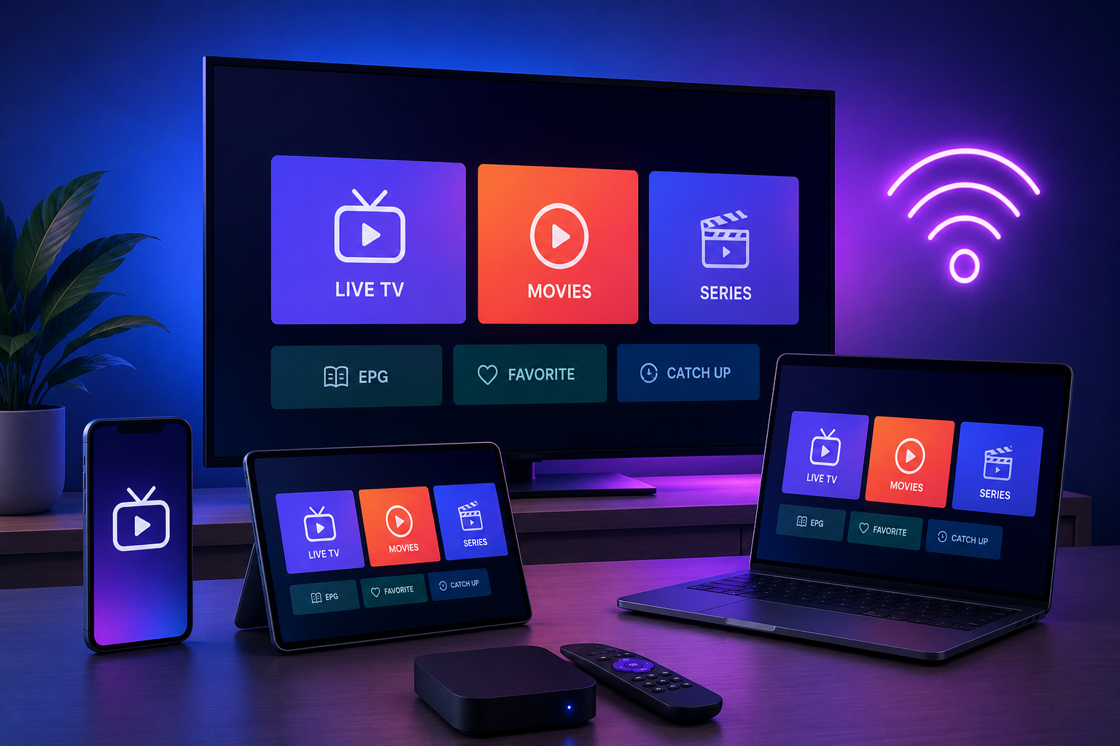
The image above illustrates the everyday reality of a maintained IPTV setup: one subscription, three screens, the same guide synced across each. That is the result you are after — not a perfect static picture, but a reliable stream wherever you sit.
Bringing It All Together
Fix IPTV issues in the right order: local network first, player second, provider last. Most of the pain you have felt was caused by one of these three links, and guessing which one wastes hours. Once you isolate the broken link, the solution becomes straightforward — adjust, switch, or upgrade that single piece of the chain.
At the end of the day, the difference between someone who constantly fights their IPTV service and someone who simply uses it is not better luck. It is the discipline to test properly, choose carefully, and avoid the traps that turn a great idea into a frustrating evening. Apply the steps above once, and you will likely never search for "ip-tv provider not working" again.
Featured Streaming Selection:
Check Out ip-tv provider Deals →Affiliate Disclosure: Clicking this secure link verified by our network supports our team through standard partnership terms at zero extra cost to your invoice.
Frequently Asked Questions
This article contains affiliate links. Our editorial analysis remains independent.