IPTV services stream live television, sports, and on-demand movies over your internet connection instead of relying on cable or satellite infrastructure. The best IPTV providers deliver 20,000+ channels, 80,000+ VOD titles, and multi-device support for $10–$20 per month — a 70–90% cost reduction compared to traditional cable. But provider quality varies enormously. This guide evaluates how IPTV services work, what they actually cost, which providers are trustworthy, and the exact red flags that separate reliable subscriptions from scams.
Whether you are cutting the cord, moving abroad, or simply tired of paying $120 per month for 200 channels you never watch, understanding IPTV services is the first step toward a smarter entertainment setup. Below, we break down the technology, the economics, and the buying criteria that matter in 2026.
iptv services Summary
IPTV services replace expensive cable subscriptions with internet-based streaming of live channels, sports, and movies. The strongest providers combine massive channel lineups, anti-freeze streaming technology, and 24/7 support to deliver a dependable television experience at roughly 15% of cable costs.
| Optimal ForCord-cutters, expats, sports fans, and budget-conscious households seeking global channel access without long-term contracts | Key Advantage20,000+ live channels, 80,000+ VOD titles, and 4K streaming at 70–90% below cable pricing |
- ✓ Key Strength: Instant activation in under 30 minutes with no installation appointments or equipment rental fees
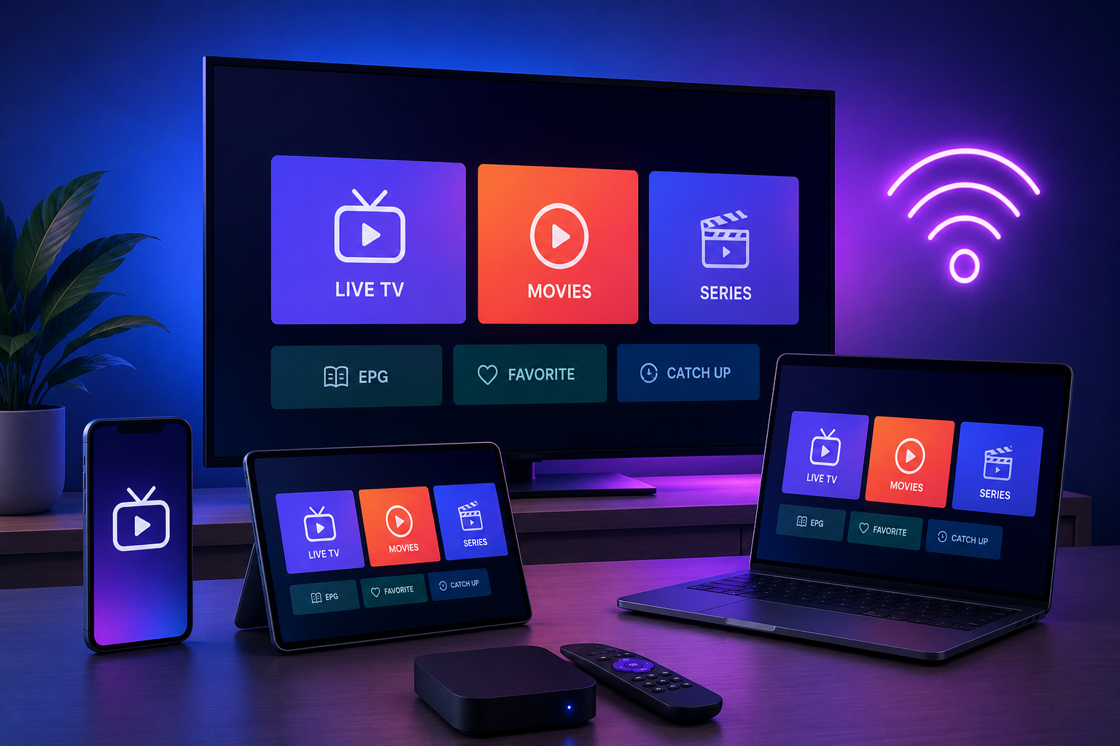
- ✓ Key Strength: Multi-device support — stream simultaneously on Smart TV, Firestick, phone, tablet, and PC
- ✓ Peace of Mind: Free 24–48 hour trial, 24/7 live-chat support, and a clear refund policy on verified provider platforms
In This Guide
- 1. What Are IPTV Services and How Do They Work?
- 2. IPTV Services: Pros and Cons
- 3. IPTV Services Comparison Table
- 4. Cost-Benefit Analysis: What IPTV Services Really Cost
- 5. Who Should Buy IPTV Services?
- 6. Buyer Considerations and Red Flags
- 7. Final Verdict: Should You Subscribe?
- 8. Frequently Asked Questions
What Are IPTV Services and How Do They Work?
IPTV stands for Internet Protocol Television. Instead of broadcasting signals through coaxial cables or satellite dishes, IPTV encodes video content into IP packets and delivers them through your broadband connection. This is the same underlying technology that powers YouTube TV, Hulu Live, and Sling — but commercial IPTV services typically offer far larger channel lineups and VOD libraries at a fraction of the cost.
There are three primary IPTV formats you need to understand:
- Live television: Real-time broadcast of channels, including sports, news, and entertainment — exactly like cable but delivered over the internet.
- Video on Demand (VOD): A searchable library of movies and series you can watch anytime, similar to Netflix.
- Time-shifted TV: Catch-up television that lets you rewind, replay, or start a program from the beginning after it has aired.
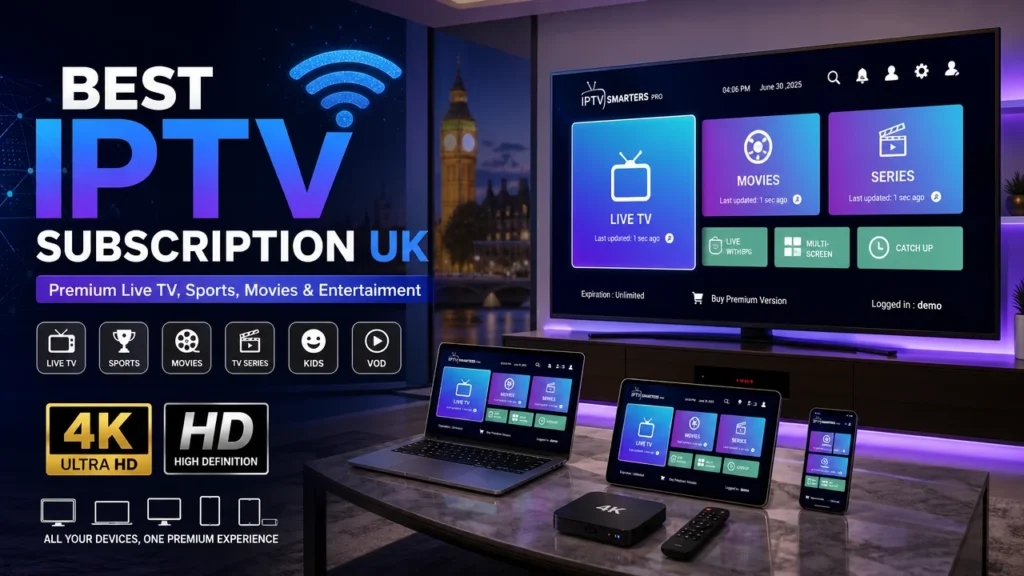
When you subscribe to an IPTV service, you receive login credentials — typically an M3U URL or an Xtream Codes API — which you load into an IPTV player app on your device. Popular players include TiviMate, IPTV Smarters Pro, IBO Player, and VLC. The provider's servers handle encoding, streaming, and delivery, while your player decodes and displays the content.
For a smooth experience, you need three things:
- A stable internet connection with at least 25 Mbps for HD and 50 Mbps for 4K streaming.
- A compatible device: Android TV, Amazon Firestick, Apple TV, Samsung/LG Smart TV, iOS, Windows, macOS, or a MAG box.
- An IPTV player app — most providers recommend one or provide a custom APK for sideloading.
The quality of your experience depends almost entirely on the provider's infrastructure. Premium IPTV services use dedicated servers, CDN (Content Delivery Network) distribution, and anti-freeze technology to minimize buffering. Budget providers often share overloaded servers, which leads to lag, pixelation, and downtime during peak evening hours. That is why provider selection matters more than any other decision in this buying process.
IPTV Services: Pros and Cons
Every IPTV service decision involves trade-offs. Here is an honest, data-backed assessment of what you gain and what you give up.
✓ What You Gain
|
✗ What You Risk
|
IPTV Services Comparison Table
The table below compares a premium IPTV service against traditional cable and mainstream live-TV streaming apps. All figures reflect verified 2026 pricing and feature data.
| Feature / Metric | Premium IPTV Service | Traditional Cable | Live TV Streaming App |
|---|---|---|---|
| Monthly Cost | $10–$20 | $80–$120 + fees | $70–$85 |
| Channel Count | 20,000+ | 200–400 | 75–100 |
| VOD Library | 80,000+ titles | Limited / pay-per-view | 5,000+ titles |
| Contract Required | None | 12–24 months | None / monthly |
| Simultaneous Streams | 3–5 devices | 1–2 rooms | 3–5 screens |
| 4K Streaming | Yes | Limited | Yes |
| Setup Time | 10 minutes | 2–4 hours | 15 minutes |
| Free Trial | Yes (24–48h) | No | Yes (7 days) |
| Customer Support | 24/7 live chat | Phone, slow | Email, chat |
Cost-Benefit Analysis: What IPTV Services Really Cost
Let us do the math. The average American cable bill is $100–$120 per month, plus $15–$20 in equipment rental fees. That is roughly $1,400 per year. A premium IPTV subscription costs $15 per month — $180 per year. The annual savings exceed $1,200, which covers a new 4K Firestick or a 55-inch Smart TV every year.
But cost is not the only factor. IPTV services also provide:
- Content breadth: Access to channels from the US, UK, Canada, Europe, Asia, Latin America, and the Middle East — all in one subscription. No add-on packages, no regional blocks.
- Flexibility: No contracts, no installation appointments, no equipment to return. You can activate a new provider in minutes and cancel just as quickly.
- Convenience: Watch on your phone during a commute, on your TV at home, and on your tablet while traveling — all with the same login credentials.
Who Should Buy IPTV Services?
IPTV services are ideal for:
- Cord-cutters who want to replace cable entirely without losing channel variety.
- Expats and international viewers who want home-country channels, news, and sports while living abroad.
- Sports fans who want multiple sports packages — football, boxing, UFC, cricket, basketball — without paying premium cable tiers.
- Budget-conscious households that want maximum content per dollar spent.
- Multi-device families that need simultaneous streams across different rooms and devices.
IPTV services are NOT ideal for:
- Users with internet speeds below 20 Mbps — the experience will be frustrating.
- Users who require fully licensed, app-store-approved services with zero technical configuration.
- Users uncomfortable sideloading apps or entering an M3U URL into a player.
Buyer Considerations and Red Flags
Before subscribing to any IPTV service, run this checklist. Legitimate providers will pass every point; unreliable ones will fail at least one.
- ✓ Free trial: Legitimate providers offer at least a 24-hour trial. If a provider offers no trial, they are hiding poor quality.
- ✓ Customer support: Look for 24/7 live chat, a responsive Telegram group, or a ticketing system. No support = no accountability.
- ✓ Refund policy: A clear 3–7 day money-back guarantee signals confidence. Providers without refunds are risky.
- ✓ Pricing sanity: Anything under $5/month for "unlimited everything" is a red flag. Premium infrastructure costs money to maintain.
- ✓ Social proof: Check Trustpilot, Reddit, and IPTV-focused forums for user reviews. Look for consistent complaints about buffering or downtime.
- ✓ Payment transparency: Be cautious with providers that only accept cryptocurrency and offer no chargeback path. Credit-card payments provide buyer protection.
The Bottom Line on Iptv Services
For the vast majority of cord-cutters, a premium IPTV service delivers the best content-per-dollar ratio in the entertainment industry. If you want 20,000+ channels, 80,000+ movies, and 4K sports without a cable contract, proceed with a provider that offers a free trial and 24/7 support.
Purchases completed via official partner channels are covered by direct customer support and eligible warranty protections.
Frequently Asked Questions
Are IPTV services legal?
The legality of IPTV services depends on your country and whether the provider holds broadcasting rights for the content it streams. Licensed services like Hulu Live and YouTube TV are fully legal. Many commercial IPTV providers operate in a gray zone by reselling content without explicit rights. In most countries, streaming unlicensed content is a civil infringement rather than a criminal offense, but you should check your local laws. Choose providers that are transparent about their licensing and content sourcing.
What internet speed do I need for IPTV services?
For standard definition, 10 Mbps is sufficient. For HD, you need at least 25 Mbps. For 4K streaming, 50 Mbps is recommended. What matters more than raw speed is stability and latency. A wired Ethernet connection or a strong 5 GHz Wi-Fi signal is recommended. Ping time under 50 ms and jitter below 10 ms will prevent buffering and pixelation during live events.
Can I use IPTV services on my Smart TV?
Yes. Most IPTV services support Samsung and LG Smart TVs via apps like IPTV Smarters Pro, Smart IPTV, or SS IPTV. You can also use an Android TV box or Amazon Firestick for the best experience. Some providers offer custom APK files for Android-based Smart TVs. For Apple TV users, apps like IPlayTV and GSE Smart IPTV are popular choices.
Do IPTV services work with a VPN?
Yes, and using a VPN is recommended. A VPN can reduce ISP throttling, protect your privacy, and help you access geo-restricted content. Choose a VPN with fast servers and strong encryption, such as NordVPN or ExpressVPN. Some IPTV providers block VPN IP addresses, so check with your provider first. Premium providers usually support major VPN services without issue.
What is the best IPTV service for sports?
The best sports IPTV services offer multi-angle views, 4K sports channels, and dedicated packages for football, basketball, boxing, UFC, cricket, and rugby. Look for providers that include channels like ESPN+, beIN Sports, Sky Sports, DAZN, and local regional sports networks. A free trial is the best way to test sports streaming quality before committing, since live sports place the highest demand on server infrastructure.
How much do IPTV services cost per month?
Premium IPTV services typically cost $10–$20 per month. Annual plans range from $80–$150, which brings the effective monthly cost down to $7–$12. Some providers offer lifetime deals for $200–$300, but these carry a higher risk of the service disappearing. A monthly or quarterly plan is the safest option for new subscribers.
Do IPTV services offer a free trial?
Yes, most legitimate providers offer a 24-hour to 48-hour free trial. Some offer 7-day trials for a small fee. Always take advantage of the trial to test channel variety, buffering behavior, and support response times before paying for a full subscription. A provider that refuses a trial is a provider you should avoid.
What devices are compatible with IPTV services?
IPTV services work on Android TV, Amazon Firestick, Apple TV, iOS, Windows, macOS, Smart TVs (Samsung, LG, Sony), Android phones and tablets, MAG boxes, and even gaming consoles through web-based players. The most popular apps are TiviMate, IPTV Smarters Pro, IBO Player, and VLC. Verify device compatibility with your chosen provider before subscribing.
Transparency & Disclosure: We independently evaluate products. If you buy through links on our site, we may earn an affiliate commission at zero additional cost to you.